A yacht can look excellent at the dock and still hide expensive problems below the waterline, behind interior joinery, or inside engine data. That is where the question of marine surveyor vs boat broker becomes more than semantics. For any serious buyer, especially in active markets such as Bodrum and the wider Mediterranean, understanding the difference is central to reducing risk.
A broker and a surveyor may both be involved in the same transaction, but they serve very different functions. One helps facilitate the deal. The other helps verify the vessel. Both can be valuable. Confusing their roles is where buyers, sellers, and even first-time owners can get into trouble.
Marine surveyor vs boat broker: what is the actual difference?
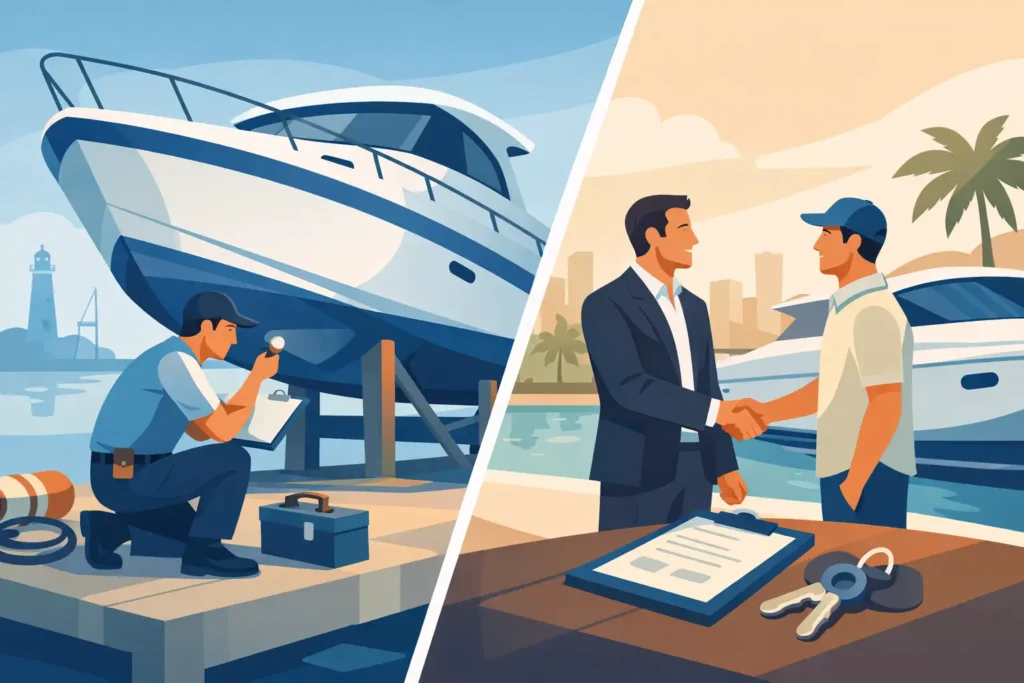
At the simplest level, a boat broker is a transaction professional. A marine surveyor is an independent technical professional. The broker’s role is to market, introduce, negotiate, and manage the sale process. The surveyor’s role is to inspect the vessel, assess condition, identify defects, and provide factual findings that support decision-making.
That distinction matters because the priorities are not the same. A competent broker wants a fair and successful transaction. A competent surveyor wants an accurate technical picture of the vessel, whether that supports the sale or complicates it.
In practice, a broker may know a great deal about boats, ownership history, market pricing, and the personalities involved in a deal. That experience is useful. But it is not a substitute for an independent pre-purchase survey, particularly on higher-value yachts, older vessels, wooden boats, multihulls, or any vessel with a complicated maintenance record.
What a boat broker does well
A good broker brings structure to a purchase that might otherwise become inefficient or poorly documented. They help match buyers with suitable vessels, coordinate viewings, explain the basic steps of the transaction, and manage communication between parties. In many cases, they also guide negotiations, deposits, offers, and closing arrangements.
Brokers can also provide useful market context. They often know whether an asking price is realistic, how long a yacht has been on the market, what comparable vessels have sold for, and whether the seller is likely to negotiate. For first-time buyers, that commercial guidance can save time and prevent obvious mistakes.
What a broker does not do, at least not in the formal and professional sense, is provide an accredited, independent technical inspection that should be relied upon as due diligence. Even when a broker is knowledgeable and acts in good faith, their role is not to replace a surveyor. The transaction and the technical verification should remain separate.
What a marine surveyor does well
A marine surveyor examines the vessel’s condition with independence and technical discipline. That typically includes structural elements, hull integrity, visible systems, machinery installation, safety items, moisture indications where relevant, signs of repair, and evidence of neglect, damage, or non-compliant work. In a pre-purchase context, the surveyor is not there to sell reassurance. The surveyor is there to test assumptions.
The value of a survey is not only in finding major faults. It is also in clarifying severity. Buyers often need help distinguishing between cosmetic wear, routine maintenance items, material defects, poor workmanship, and safety-critical concerns. A detailed survey report creates that hierarchy, which is essential for rational negotiation and planning.
This is particularly important in yacht transactions where presentation can be misleading. Fresh upholstery, polished topsides, and a tidy engine room do not always reflect the true state of the asset. Hidden moisture, outdated installations, deferred maintenance, collision repairs, or improper modifications may only become evident during a careful inspection and sea trial process.
Why independence matters in a yacht purchase
The most important difference in marine surveyor vs boat broker is independence. That is not a criticism of brokerage. It is simply a recognition that each party has a different professional function.
A broker is connected to the sale. A surveyor should be connected to the facts.
When buyers rely too heavily on any party involved in the transaction to interpret technical condition, objectivity can become blurred. That does not mean anyone is acting improperly. It means incentives are different. A surveyor’s duty is strongest when it remains free from sales pressure, relationship dynamics, and the understandable desire to keep a deal moving.
Independent technical due diligence is especially valuable when a vessel is being purchased across borders, when ownership history is incomplete, or when the buyer is less familiar with local market norms. In Turkey and across the Mediterranean, this can include issues such as undocumented repairs, inconsistent maintenance standards, imported equipment histories, or refit work completed to varying levels of quality.
Where buyers get confused
Many buyers assume that because a broker is experienced, the broker’s view of the boat’s condition is enough. Sometimes that confidence comes from years in the market. Sometimes it comes from a relationship of trust. But experience in selling boats and expertise in inspecting boats are not the same discipline.
Another common misunderstanding is that a survey only matters if the boat is old or obviously worn. In reality, newer vessels can have significant defects as well, particularly after refits, groundings, charter use, poor commissioning, or modifications that were never properly engineered.
There is also the belief that a survey is mainly for insurance or finance. Those are valid uses, but for a buyer, the most immediate purpose is decision protection. A proper survey helps answer basic but expensive questions: Is the vessel materially as represented? What is likely to need attention soon? Are there defects serious enough to change the price, the timetable, or the decision to proceed at all?
When you need both a broker and a surveyor
In many transactions, the right answer is not choosing one over the other. It is using both correctly.
A capable broker can help locate the right vessel, frame the offer, and manage the commercial process efficiently. An independent surveyor can then inspect the yacht and provide the technical evidence needed to validate the purchase or challenge assumptions before funds are fully committed.
That combination works well because each professional stays in their lane. The broker handles the deal mechanics. The surveyor handles condition assessment and technical reporting. When the roles are clear, buyers are better protected and sellers benefit from a cleaner, more credible process.
For sellers, this distinction matters too. A broker can position the yacht in the market and bring qualified interest. A surveyor can help identify issues in advance, support realistic expectations, and reduce the chance of a late-stage collapse when a buyer’s findings emerge unexpectedly.
Marine surveyor vs boat broker in negotiation
Survey findings often influence price, repair requests, delivery terms, and completion timing. This is where the relationship between the two roles becomes most visible.
A broker may help translate survey findings into commercial outcomes. That can mean discussing whether a defect is minor, whether a repair credit is appropriate, or whether a seller should remedy an issue before closing. But the broker should not be the authority on the technical seriousness of the finding. That judgment belongs to the surveyor.
The strongest negotiations are built on clear facts. A precise survey report gives both sides something far more useful than opinion. It gives them evidence. That tends to reduce emotion and helps keep discussions focused on scope, cost, and risk.
Choosing the right surveyor for a pre-purchase inspection
Not all surveyors offer the same depth, reporting quality, or communication standard. Buyers should look for independence, relevant vessel experience, clear methodology, and reports that do more than list defects without context. The real value often lies in interpretation.
This is where a service-oriented technical advisor can make a meaningful difference. A buyer may need not just a report, but also guidance on repair priority, budget implications, refit planning, or whether a defect is a deal-breaker or a manageable ownership issue. That broader advisory role is often what turns inspection data into a sound decision.
For clients purchasing in Turkey or the Eastern Mediterranean, communication quality also matters. Transactions may involve international buyers, local yards, multilingual documentation, and time-sensitive negotiations. Clear English-language reporting and direct, factual communication can prevent misunderstandings at exactly the moment when precision matters most.
At The Blue Matter, this is approached as technical due diligence rather than a box-ticking exercise. The goal is not to create alarm, and not to keep a transaction alive at any cost. It is to provide an honest view of the vessel so the client can proceed with clarity.
The practical takeaway
If you are buying a yacht, ask the broker to help you through the market and the transaction. Ask the surveyor to tell you what the boat actually is, in technical terms, on the day of inspection.
That separation is healthy. It protects the buyer, supports fair negotiation, and usually leads to better decisions for everyone involved. When large sums, safety, and future refit costs are on the table, clarity is far cheaper than assumption.
The best boat purchases are not the ones that feel easiest in the first hour. They are the ones that still make sense after the facts have been checked.