What is done in a marine survey?
Answered by Mustafa Aksut, Accredited Marine Surveyor, IIMS, ABYC, and Navtech USSA Member
A marine survey is a detailed physical examination and appraisal of a vessel’s structure, systems, and overall condition to determine its seaworthiness and market value. The exact scope depends on the survey type—such as a pre-purchase, insurance, damage, or coding inspection. Based on my detailed inspection process—which typically covers 300 to 500 individual check items depending on vessel size and complexity—every comprehensive marine survey evaluates these core areas:
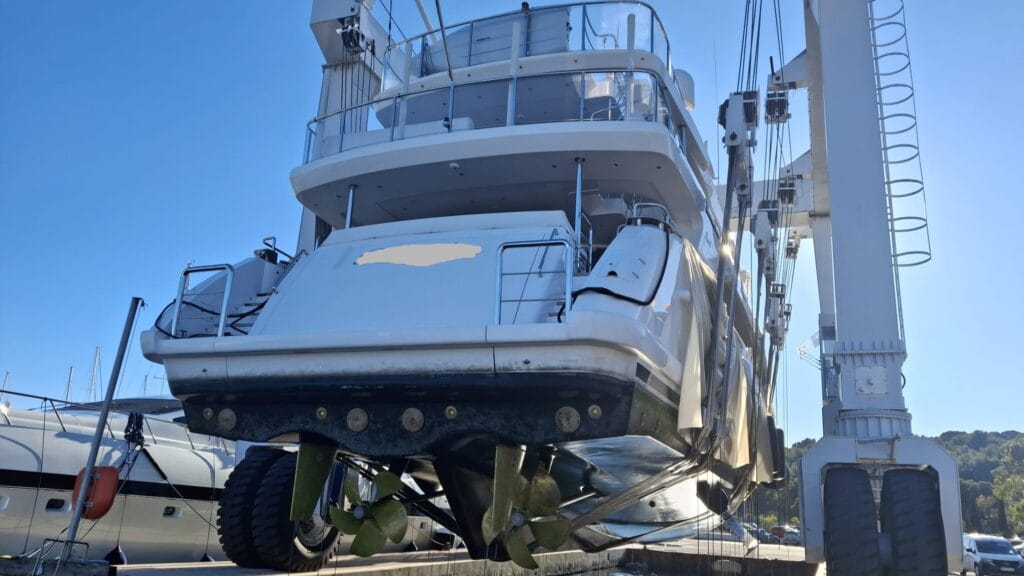
Structural and Hull Integrity Survey
Hull & Topsides Inspection
Detecting any cracks, blisters, structural torsion, or impact damage on the hull.Non-Destructive Testing Methods (Moisture Meters & Percussion Sounding):
For Fiberglass Reinforced Plastic (FRP) vessels, a non- destructive moisture meter test can locate any unforeseen moisture pockets that could lead to osmotic blistering.Sounding:
(aka, percussion sounding or percussion testing) A sounding will detect any delamination or rot in composite or wooden construction hulls.Through Hulls, Seacocks and Skin Fittings:
All underwater fittings and seacocks are inspected for signs of corrosion, signs of previous leaks and correct double clamping.Systems and Mechanical Survey
Engine & Mechanical System Scope:
The surveyor will carry out a visual inspection of the main engines, gearbox, exhausts, motor mounts and engine coolant lines. A complete mechanical survey should be carried out by a certified independent engine mechanic.Electrical System Survey:
This involves a review of both AC and DC electrical systems, engine battery, charging systems, conductor runs, generators, system labeling, fusing, and grounding.Steering and Controls Survey:
The surveyor will check the rudder post, linkages, power steering cylinders and throttle/shift controls for any play or wear and tear.Life-Saving Appliances & Statutory Requirements Survey
This involves; Life-Saving Appliances Survey: Survey of life rafts, life-jackets, flares and fire extinguishers Navigation Lights, Radar and Communication Survey: Survey of life-saving appliances, navigation lights, radar, GPS and radio communications equipmentStatutory Survey:
Survey to determine conformity with regulations and standards specified by appropriate regulatory agencies or classification societies such as ABYC, ISO, MCA and other statutory bodies.The haul-out survey
(a.k.a. out of water survey) This enables a complete inspection of the running gear (propellers, shafts, struts, cutless bearings, keel and rudder) to check for damage and to carry out a thorough underwater body inspection.Survey Report
The surveyor issues a detailed survey report. This includes the fair market valuation of the vessel, a list of urgent defects requiring correction and a surveyor’s recommendation on periodic maintenance.Frequently Asked Questions About Survey Scope
What is the primary purpose and objective of a marine survey?
The primary objective of a marine survey is to provide an objective, unbiased evaluation of a vessel’s structural integrity, safety systems, operational condition, and fair market value. Whether conducted for a buyer (pre-purchase), an insurance underwriter, or a financial lender, the survey identifies critical safety hazards, necessary repairs, and compliance with statutory standards such as ABYC, ISO, or MCA.
What is the difference between a marine survey and a basic vessel inspection?
While a basic vessel inspection or quick walk-through provides a high-level visual check of obvious equipment, a marine survey is a comprehensive, technical audit. A survey involves non-destructive structural testing, in-depth evaluation of DC/AC electrical grids, plumbing, fuel systems, life-saving appliances, an out-of-water haul-out inspection of the underwater body, and the issuance of a formal legal and financial valuation report.
Have questions about costs or preparations? Explore our complete Marine Survey FAQ Hub or read about how to prepare your yacht for a survey

Mustafa Aksut is an Accredited Marine Surveyor with proven observation skills and solid technical knowledge. Mustafa gained extensive work experience while working as a marine Surveyor in Turkey and as a Marine service expert in Canada and the Bahamas.
He has completed a wide variety of projects, including but not limited to complete refits, electronics, electrical, engines and mechanical, plumbing, refrigeration, rigging, and safety systems on both sailing and motor yachts up to 150 feet in size.
Mustafa Aksut, with years of experience, is a leading marine surveyor who helps clients feel assured about their boats. He has personally inspected a wide range of vessels, from modern catamarans to traditional wooden yachts. His surveys include boats as small as 26 feet and as large as 150 feet, always with meticulous detail.
He has also managed many large refit projects for both wooden and fibreglass boats. This hands-on work allows him to spot problems early and provide smart advice that others might miss.
Mustafa Aksut, as an early adopter of the technology, uses proven tech for his inspections. To be able to reveal the entire story of the vessel, Mustafa uses thermal imaging, oil analysis, ultrasonic testers and more. Technology backs up the marine surveyor with more accurate non-destructive testing possibilities
Whether you’re buying a boat, checking on your current one, or planning a major project, Mustafa Aksut is the expert you can trust. His direct and clear reporting style and straightforward approach give you the confidence to feel safe while cruising.
Mustafa Aksut is a member of ABYC (American Boat and Yacht Council) ABYC standards are the foundation of his practice. Learn more about ABYC standards.
Mustafa Aksut also holds an Assoc IIMS from IIMS (International Institute of Marine Surveying) and Master Marine Surveyor credential through Navtech-USSA (US Surveyors Association).