What Documents Are Needed for a Marine Survey? Checklist & Preparation Guide
Answered by Mustafa Aksut, Accredited Marine Surveyor, IIMS, ABYC, and Navtech USSA Member
Preparing the correct documentation prior to a marine survey is essential for a smooth, efficient, and accurate evaluation. Whether you are conducting a pre-purchase survey, an insurance renewal, or a valuation inspection, having complete ownership records, maintenance histories, and equipment manuals available allows the surveyor to verify vessel identity, structural compliance, and legal standing.
This guide outlines the essential paperwork, certificates, and historical records required before your marine survey begins.
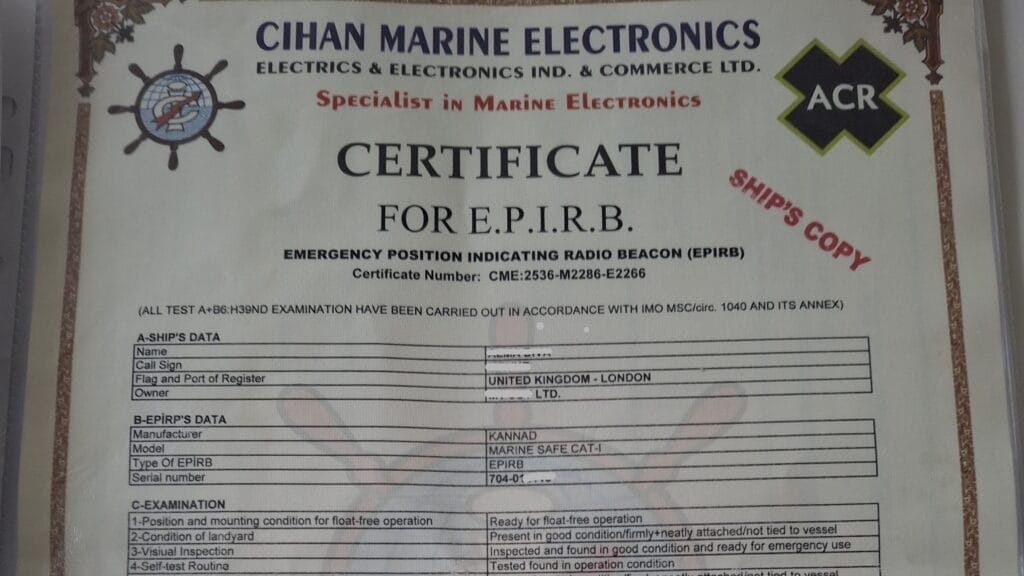
1. Ownership & Registration Paperwork
Verifying legal ownership, registration status, and Hull Identification Numbers (HIN) is the foundation of any marine survey report:
- Certificate of Registry or State/Provincial Title: Official documentation establishing legal ownership, official flag state, registration number, and home port.
- Bill of Sale & Chain of Title: Proof of purchase documents, especially critical for imported or recently transferred vessels to verify tax and duty paid status (e.g., VAT or sales tax status).
- Hull Identification Number (HIN) Documentation: Documentation confirming the vessel’s official 12-character HIN or serial number to match the physical plate on the transom or hull structure.
- Radio Station License & MMSI Registration: Official documentation for fixed VHF, AIS transponders, and EPIRBs registered to the vessel.
2. Vessel Manuals & Technical Documentation
Technical manuals and equipment schematics assist the surveyor in verifying system installations against manufacturer standards and safety codes:
- Engine & Generator Operator Manuals: Documentation detailing operating parameters, fluid capacities, service intervals, and factory specifications.
- Electrical System Schematics: Wiring diagrams for AC and DC electrical systems, main panel layouts, and inverter/charger configurations.
- Plumbing & Thru-Hull Diagrams: Layout drawings showing thru-hull valve locations, seacocks, blackwater holdings, and bilge pump plumbing routes.
- Riggings & Sail Plans (for Sailboats): Spar dimensions, standing rigging replacement logs, and sail inventories.
3. Maintenance, Overhaul & Inspection History
Documented maintenance records provide valuable historical context regarding how the vessel has been cared for over time:
- Engine Service & Overhaul Logs: Receipts and technician invoices for oil analysis reports, heat exchanger servicing, elbow/riser replacements, and major engine rebuilds.
- Previous Marine Survey Reports: Prior condition and valuation reports showing past findings, structural repairs, or surveyor recommendations that were completed.
- Haul-Out & Bottom Painting Records: Service logs detailing bottom paint application dates, gelcoat/osmosis repairs, blister treatments, and zinc anode replacements.
- Safety Equipment Certifications: Current inspection certificates for liferafts, fixed fire suppression systems, and hydro-tested fire extinguishers.
4. Insurance & Commercial Coding Documents (If Applicable)
Depending on the vessel’s usage, additional specialized documents may be requested:
- Current Marine Insurance Policy: Details regarding required coverage limits, navigation boundaries, and existing navigational warranties.
- Commercial Coding / Small Commercial Vessel (SCV) Certificates: Official inspection certificates and compliance paperwork for charter or commercially coded vessels.
Frequently Asked Questions About Survey Documentation
Q: Do I need to provide physical copies or digital PDFs of documents?
A: Digital copies (PDFs) sent via email prior to the survey date are preferred, as it allows the surveyor to pre-populate vessel specification data into the report structure.
Q: What if I cannot find the original Certificate of Registry?
A: A valid temporary registration or official state/national database record can be used temporarily, but full registration must be verified before the final survey report can be issued.
Q: Why does a marine surveyor need to see prior survey reports?
A: Prior reports help the surveyor verify if previous structural or mechanical recommendations were properly addressed, ensuring safety issues have been resolved.
Related Marine Survey Resources
Explore additional guides from our FAQ hub to prepare for your inspection:
- FAQ Hub: Return to the central Marine Survey FAQ Hub.
- Survey Scope: Review the complete inspection process in what is done in a marine survey.
- Survey Preparation: Learn how to prepare your vessel in how to prepare a boat for a marine survey.
- Sea Trials: Understand operational testing parameters in what is included in a sea trial.

Mustafa Aksut is an Accredited Marine Surveyor with proven observation skills and solid technical knowledge. Mustafa gained extensive work experience while working as a marine Surveyor in Turkey and as a Marine service expert in Canada and the Bahamas.
He has completed a wide variety of projects, including but not limited to complete refits, electronics, electrical, engines and mechanical, plumbing, refrigeration, rigging, and safety systems on both sailing and motor yachts up to 150 feet in size.
Mustafa Aksut, with years of experience, is a leading marine surveyor who helps clients feel assured about their boats. He has personally inspected a wide range of vessels, from modern catamarans to traditional wooden yachts. His surveys include boats as small as 26 feet and as large as 150 feet, always with meticulous detail.
He has also managed many large refit projects for both wooden and fibreglass boats. This hands-on work allows him to spot problems early and provide smart advice that others might miss.
Mustafa Aksut, as an early adopter of the technology, uses proven tech for his inspections. To be able to reveal the entire story of the vessel, Mustafa uses thermal imaging, oil analysis, ultrasonic testers and more. Technology backs up the marine surveyor with more accurate non-destructive testing possibilities
Whether you’re buying a boat, checking on your current one, or planning a major project, Mustafa Aksut is the expert you can trust. His direct and clear reporting style and straightforward approach give you the confidence to feel safe while cruising.
Mustafa Aksut is a member of ABYC (American Boat and Yacht Council) ABYC standards are the foundation of his practice. Learn more about ABYC standards.
Mustafa Aksut also holds an Assoc IIMS from IIMS (International Institute of Marine Surveying) and Master Marine Surveyor credential through Navtech-USSA (US Surveyors Association).