A sound wooden yacht can remain structurally capable for generations. A neglected one can conceal serious deterioration behind fresh paint, a clean bilge, or an attractive interior refit. Wooden boat rot prevention is therefore not a cosmetic maintenance task. It is a disciplined process of keeping timber dry, allowing it to ventilate, maintaining coatings and fastenings, and investigating small changes before they become structural repairs.
For owners and prospective buyers in Bodrum and across the Mediterranean, the risk is not limited to winter rain. Intense sun degrades coatings, seasonal lay-up alters ventilation, deck hardware leaks can travel unnoticed, and a vessel that appears dry at the surface may retain moisture within structural timber. The condition of a wooden boat should be assessed in the context of its construction, age, use, maintenance history and recent storage conditions.
Why wood rots on boats
Rot requires moisture, oxygen, a suitable temperature range and susceptible timber. Remove or control one of those elements and decay is far less likely to progress. In practice, the realistic objective is moisture control. Boats cannot be made entirely dry, nor should traditional timber construction be treated as if it were a sealed composite structure. The aim is to prevent prolonged wetting and give the structure a reliable path to dry.
Fungal decay commonly begins where water is trapped: beneath poorly bedded deck fittings, at chainplates, around fasteners, inside enclosed lockers, under wet insulation, behind linings, and where frames meet floors or planking. End grain is particularly vulnerable because it absorbs water readily. Fresh water is often more damaging than seawater because it supports decay organisms more readily, so a small rainwater leak can be more consequential than occasional saltwater spray.
The first signs may be subtle. A coating that repeatedly fails in one area, dark staining around a fastening, a damp or earthy smell, a locally soft deck, unexplained movement at a fitting, or persistent moisture in the bilge all justify closer examination. None proves rot on its own, but each is evidence that should be followed rather than painted over.
Wooden boat rot prevention starts with water management
The most effective preventative work is usually unglamorous. Keep rainwater out, direct water away, and make it possible for damp areas to dry. This begins with the deck. Hatches, portlights, stanchion bases, cleats, tracks, chainplates, ventilators and mast partners should be inspected regularly for failed bedding, cracked sealant, loose fasteners and local coating damage.
Re-bedding hardware is a planned maintenance item, not an admission of failure. Sealants age under ultraviolet exposure and movement. If a fitting has begun to leak, tightening fasteners may temporarily reduce the symptom while compressing tired bedding and damaging surrounding timber. Proper re-bedding normally requires removing the fitting, cleaning the mating surfaces, checking for wet or degraded wood, repairing the substrate where required, and refitting with an appropriate bedding system.
Below deck, bilges require equal attention. A dry bilge is desirable, but the more useful question is why water is present. Shaft seals, plumbing joints, deck leaks, condensation, air-conditioning drains and poorly routed cockpit drains can all contribute. Standing water against timber floors or frame heels should never be accepted as normal. Bilges should be clean enough that new water, staining, corrosion or debris can be identified quickly.
Drainage paths also need to remain open. Scuppers, limber holes and cockpit drains that clog with leaves, paint debris or accumulated dirt can create prolonged wet conditions exactly where timber is difficult to inspect. During a refit, any alteration that blocks ventilation or drainage should be reviewed carefully. A neat interior finish is of little value if it encloses a future moisture problem.
Ventilation is part of the structure’s protection
Ventilation is often misunderstood as simply opening a hatch on a sunny day. Effective ventilation moves humid air out of enclosed spaces while avoiding rain ingress and creating cold, damp pockets. Lockers, forepeaks, lazarettes, engine spaces and areas behind fixed joinery deserve particular attention because they can remain damp long after the main cabin feels dry.
During lay-up, owners should consider the local climate, shore-power reliability and security arrangements. Passive vents can be effective when correctly positioned, while low-energy fans or dehumidification may be justified for boats stored afloat or closed for extended periods. Dehumidifiers are useful tools, but they are not a cure for leaks. If they run continuously because the vessel is taking in water, the underlying defect remains active.
There is a trade-off. Excessive heat and very low humidity can be unhelpful for some traditionally built vessels, particularly where timber movement is already a concern. The appropriate approach depends on whether the boat is carvel, strip-planked, cold-moulded, glued-lapstrake or another construction type. Prevention should respect how the hull was designed to work.
Maintain coatings, but do not use paint as a diagnosis
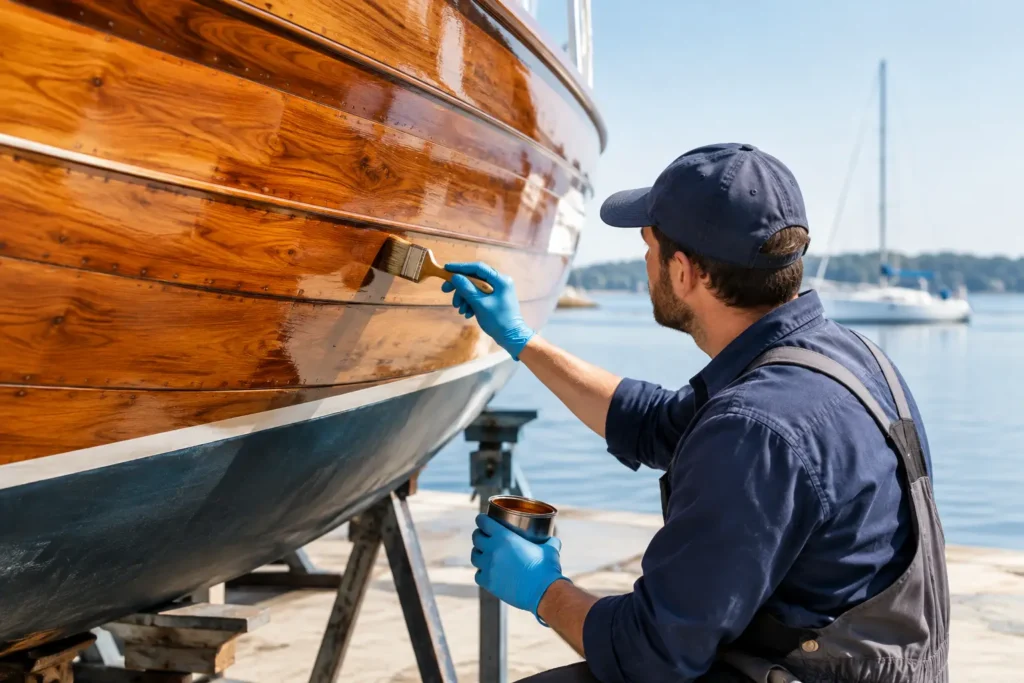
Paint and varnish are protective systems, not permanent barriers. Ultraviolet exposure, movement, abrasion and poor preparation eventually create cracks or lifted edges through which water can enter. Regular washing, careful inspection and timely spot repairs can prevent a small coating failure from becoming a deep timber repair.
The preparation stage matters more than the shine. Timber must be suitably dry, sound and properly prepared before coating. Applying paint over damp wood can trap moisture and make future assessment more difficult. Likewise, applying fairing compounds, sealants or heavy coatings over an unexplained soft area may hide evidence while decay continues beneath.
Fastenings deserve similar care. Corroded or loosened fasteners can permit movement and water entry, while metallic staining may indicate a fastening problem below the surface. Replacement should be based on a clear understanding of the original fastening material, timber species and construction method. Randomly mixing metals or replacing isolated fasteners without investigating the surrounding area can create further problems.
Inspect high-risk areas methodically
A useful owner inspection is systematic rather than reactive. Work from the top down: deck seams and fittings, cabin sides and window openings, mast and rigging penetrations, cockpit lockers, bulwark connections, chainplate zones, bilges, engine beds, shaft log, rudder area and transom. Record observations with dates and photographs. A repeated stain or crack is more informative when its history is known.
Pay particular attention after heavy rain, a long period unattended, a grounding, major rigging work, or a change in storage. These events often reveal vulnerabilities. If water appears in the bilge after rainfall, tracing the route is more valuable than merely pumping it out. Water can travel along frames, wiring runs and interior linings before emerging far from the actual leak.
Simple hand tools and close observation remain valuable. A sounding hammer can identify changes in response, while a probe used cautiously in an already suspect or exposed area may help define soft timber. However, indiscriminate probing causes damage and can give false confidence when decay lies deeper within the structure.
Moisture meters are also useful, but readings require interpretation. Species, temperature, salt contamination, metal fastenings, coatings and meter type can all affect results. A high reading identifies an area requiring investigation; it does not establish the extent of rot by itself. Survey findings should combine moisture data with visual inspection, sounding, construction knowledge and, where justified, selective opening-up.
What a pre-purchase survey should establish
For a buyer, the central question is not whether an older wooden boat has any defects. Most vessels of age will have maintenance items. The question is whether the observed deterioration is local and manageable, or evidence of a wider moisture and structural problem that will materially affect safety, cost, timing or insurability.
An independent survey should assess accessible structural timber, deck condition, coatings, fasteners, drainage, ventilation, bilges and known water-entry points. It should identify limitations clearly. Furniture, tankage, fixed linings and recent cosmetic work can restrict access, and concealed areas may require further investigation before a purchase is finalised.
The value of clear reporting is prioritisation. A buyer needs to distinguish urgent safety or structural work from routine maintenance, and to understand where specialist timber repairs may expand once the vessel is opened. The Blue Matter approaches this process with factual judgement: neither assuming that every old boat is a liability nor allowing fresh presentation to substitute for evidence.
When a small defect needs immediate action
Do not wait for a scheduled refit if you find timber that is visibly soft, crushed around a loaded fitting, dark and wet beneath a leaking deck penetration, or associated with movement in the rig, rudder, engine bed or hull structure. These conditions need prompt professional assessment. The same applies to unexplained changes in hull shape, opening seams, recurring leaks, or persistent wetness around structural members.
Early repairs are usually more controlled because they preserve sound material and permit a repair to be properly scarfed, fastened, bonded or finished according to the vessel’s construction. Delay often turns a local repair into removal of joinery, systems and adjacent structure.
A wooden yacht rewards owners who look closely and act calmly. Keep water moving away from timber, keep enclosed spaces able to dry, document changes, and ask for independent technical advice before a small uncertainty becomes an expensive assumption.