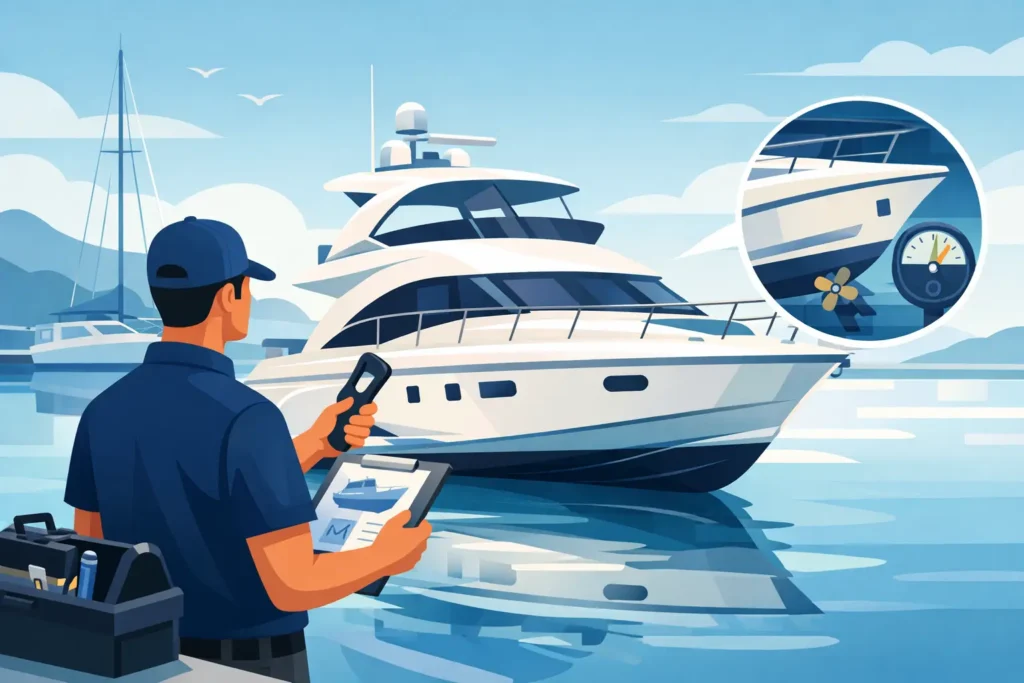
A yacht can look immaculate alongside the quay in Bodrum and still hide expensive problems behind clean paint, polished stainless, and a recent engine service note. That is where boat surveyor services become essential. When the decision involves serious money, technical complexity, and often a tight transaction timeline, objective inspection is not a luxury. It is part of proper risk control.
In the Mediterranean market, buyers are often reviewing vessels that have seen intensive seasonal use, long periods afloat, multiple refits, or ownership histories spread across different jurisdictions. Sellers may be acting in good faith and still not know the full condition of their own vessel. Brokers can facilitate a transaction, but they are not there to provide an independent technical judgment. A marine surveyor serves a different role – to assess the vessel as it is, document findings clearly, and help the client make a sound decision based on evidence rather than assumption.
What boat surveyor services actually cover
Many people hear the word survey and think only of a quick walk-through with a moisture meter. Serious boat surveyor services are far more detailed than that, especially for pre-purchase work. The process usually begins before anyone steps aboard. Documents, vessel type, build method, intended use, machinery arrangement, and transaction context all affect the scope of inspection.
A proper survey may include assessment of the hull and structure, deck, superstructure, machinery spaces, propulsion systems, steering, electrical systems, tankage, safety equipment, visible plumbing systems, and signs of water ingress, corrosion, fatigue, poor repairs, or deferred maintenance. Depending on the assignment, it may also include sea trial observations and out-of-water inspection to examine underwater sections, appendages, and hull condition properly.
Just as important as finding defects is placing them in context. Not every issue is a deal-breaker. A moisture reading in isolation means little without understanding laminate construction, previous repairs, and corroborating evidence. Cosmetic cracking may be minor, or it may point to movement below the surface. A disciplined surveyor distinguishes between normal aging, poor upkeep, design-related quirks, and conditions that materially affect safety, value, or future cost.
Why independent boat surveyor services matter
High-value yacht transactions can attract strong opinions from everyone involved. The owner may be emotionally attached to the vessel. The buyer may already imagine the first season on board. The broker may be working to keep momentum in the deal. That is exactly why independence matters.
Independent boat surveyor services protect the client from filtered information. The surveyor is not there to justify a purchase or rescue a sale. The task is to observe, inspect, verify where possible, and report without bias. That objectivity has practical value. It helps buyers negotiate from fact, helps sellers present a vessel honestly, and helps owners prioritize maintenance based on actual condition rather than guesswork.
For first-time buyers, independence often provides something equally valuable: clarity. Yacht ownership introduces a technical vocabulary that can be hard to interpret under pressure. A good survey report should not bury the client in jargon. It should explain what was found, why it matters, and what action is sensible next.
Pre-purchase surveys are not the same as valuation shortcuts
One of the most common misunderstandings in the market is the idea that a survey exists mainly to confirm price. In reality, pre-purchase inspections are a form of technical due diligence. They are meant to expose risk, not simply support a valuation figure.
Of course, condition and value are linked. A yacht with neglected systems, poorly executed modifications, or hidden structural concerns may need significant corrective work, and that should influence the negotiation. But the real purpose of the survey is broader. It helps a buyer understand what they are acquiring, what immediate safety or compliance issues may need attention, and what ownership costs could appear soon after completion.
That distinction matters because some vessels are still worth buying even when the survey identifies substantial defects. The decision depends on price, intended use, yard access, project appetite, and timeline. An experienced owner may accept a demanding refit opportunity that would be entirely unsuitable for a first-time buyer seeking immediate, reliable cruising. The survey does not make the decision for the client. It gives the client the factual basis to make the decision properly.
What a good survey report should give you
A useful report is more than a checklist of faults. It should be structured, specific, and written with enough technical depth to be credible while remaining practical for the reader. If a report is vague, overly dramatic, or disconnected from real operational consequence, it is difficult to use during negotiation or ownership planning.
The best reports identify observed deficiencies, note limitations of access or testing, and distinguish between safety concerns, maintenance items, and recommendations for specialist follow-up. They also help the client separate urgent defects from medium-term expenditure. That can be crucial after purchase, when budgeting decisions need to be made quickly.
Communication around the report matters too. Survey findings often raise immediate questions. Is the corrosion superficial or advanced? Does engine wear suggest imminent overhaul, or simply age-consistent service history? Is a repair acceptable, or does it need redesign? Clients benefit when the surveyor can explain findings calmly and directly, without minimizing genuine concerns or overstating routine defects.
When owners and sellers should use boat surveyor services
Boat surveyor services are not only for buyers. Existing owners often benefit from an independent condition review before a major cruising season, insurance renewal discussion, refit decision, or dispute over repair quality. A survey can reveal patterns of deterioration early enough to prevent larger costs later.
For sellers, an independent pre-sale survey can also be valuable. It will not make every vessel perfect, but it can reduce friction in the transaction. If known defects are documented and addressed before marketing, there is less chance of a late-stage surprise disrupting negotiations. Serious buyers also tend to respond better when the technical condition of the vessel has been handled transparently.
This is especially relevant in markets with international clients, where buyers may be remote, viewing time may be limited, and confidence depends heavily on the quality of professional advice around the transaction.
Choosing the right surveyor for a yacht purchase
Not all survey work is equal, and not every surveyor is suited to every yacht. Vessel type matters. A classic wooden yacht, a modern FRP sailing yacht, a multihull, and a large motoryacht each present different construction details, failure patterns, and inspection priorities.
Clients should look for independence, relevant accreditation, strong reporting standards, and clear communication. Local market knowledge is also useful, especially in places such as Bodrum and the wider Eastern Mediterranean, where yard practices, climate effects, seasonal wear, and regional transaction habits shape what a surveyor is likely to encounter.
It is also worth asking how the surveyor approaches limitations. No inspection gives X-ray vision. Some systems cannot be fully tested without disassembly, specialist diagnostics, or operational conditions that are not available on the day. A credible surveyor is clear about what was inspected, what was not, and where further specialist input may be appropriate. That transparency builds trust because it respects the limits of evidence instead of pretending certainty.
For clients who need more than inspection, a broader technical advisor can add real value. The Blue Matter, for example, operates not only in surveying but also in consulting and project oversight, which can be particularly useful when a survey leads to refit planning, repair negotiation, or technical decision-making after purchase.
The real value is better decisions
The cost of a survey is easy to see on an invoice. The cost of not having one usually appears later – in renegotiations that should have happened sooner, repair bills that upset the first season, or ownership decisions made on incomplete information.
Good boat surveyor services do not exist to kill deals. They exist to improve decisions. Sometimes that means confirming that a vessel is fundamentally sound. Sometimes it means adjusting price to reflect real condition. Sometimes it means walking away before a manageable purchase turns into an expensive technical project.
For buyers, owners, sellers, and marine investors, that is the point. Confidence in a yacht transaction should come from evidence, not optimism. When the inspection is independent, the reporting is detailed, and the advice is practical, the path forward becomes much clearer.