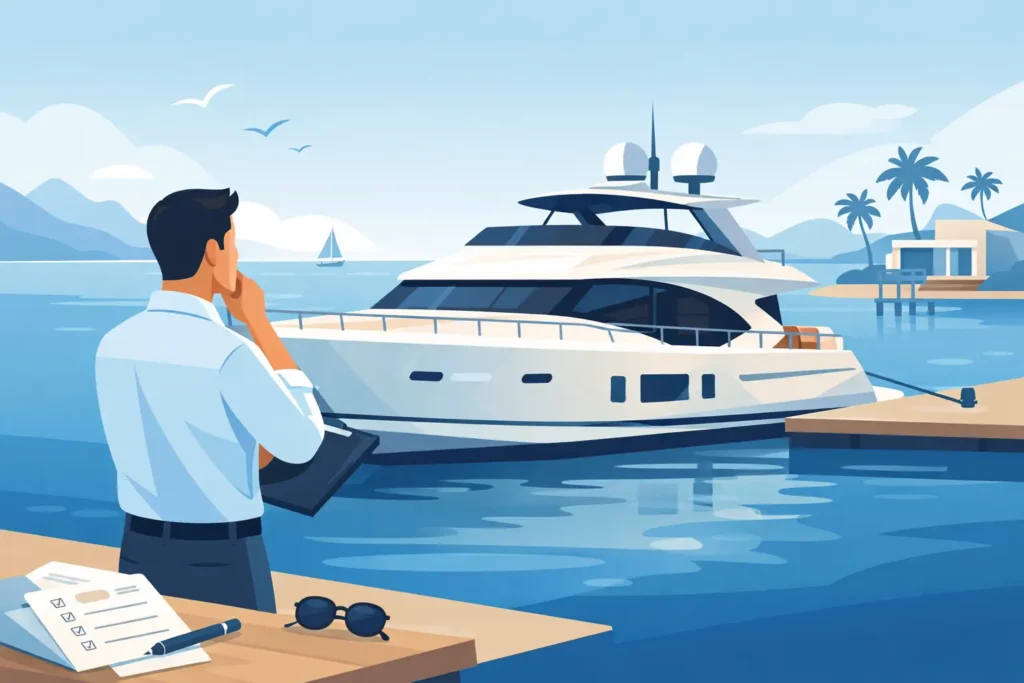
The first mistake many buyers make is shopping by image before they shop by use. A yacht that looks right in a listing can be entirely wrong for your cruising plans, crew size, maintenance tolerance, or budget. If you are learning how to buy your first yacht, the safest starting point is not the brokerage page. It is a clear definition of how you will actually use the vessel.
That sounds simple, but it has real consequences. A family planning short summer trips along the Turkish coast has very different requirements from an owner expecting longer Mediterranean passages, frequent entertaining, or liveaboard comfort. Layout, draft, fuel consumption, engine access, storage, systems complexity, and even berth availability can quickly turn a promising purchase into an expensive compromise.
How to buy your first yacht starts with the right brief
Before viewing boats, decide what kind of ownership you want, not just what kind of yacht you admire. Think about where the boat will be used, how many people will typically be aboard, whether speed matters, and how much technical involvement you are comfortable with. A first-time buyer often underestimates how much day-to-day ownership is shaped by practical details rather than headline specifications.
A 40-foot yacht with straightforward systems may provide far more enjoyment than a larger vessel that stretches your budget and demands constant contractor support. Equally, a buyer focused only on purchase price may overlook operating costs that make the boat difficult to keep. The best first yacht is rarely the most impressive one you can afford to acquire. It is the one you can afford to own, maintain, and use with confidence.
This stage is also where trade-offs become clearer. A sailing yacht may offer lower fuel burn and a more traditional ownership experience, but it can involve more sail-handling knowledge and different maintenance priorities. A motoryacht may suit coastal cruising and entertaining, yet fuel, machinery, and marina costs can rise quickly. Multihulls offer space and stability, but berth options and haul-out logistics may be more restrictive in some locations.
Set a real budget, not just a purchase budget
Buyers often ask what they can buy for a certain amount. The better question is what they can buy and responsibly run. The purchase price is only one part of the decision.
When planning your budget, allow for taxes, registration, insurance, mooring, seasonal haul-out, routine maintenance, safety equipment, and immediate remedial works after purchase. On a used yacht, there is almost always a list of items that need attention within the first year, even on well-kept vessels. Some are minor. Some affect safety, reliability, or insurability.
This is particularly relevant in the Mediterranean market, where many yachts are presented beautifully but may have deferred maintenance hidden behind polished cosmetics. Fresh upholstery and clean decks do not tell you the condition of seacocks, bonding systems, moisture levels, engine service history, or tank integrity.
A prudent buyer keeps a reserve fund. If owning the yacht only works financially when nothing goes wrong, the budget is too tight.
Choose the type of yacht before choosing the individual yacht
One reason first purchases go off course is that buyers compare very different boats as if they are interchangeable. They are not. A planing motoryacht, displacement trawler-style vessel, performance sailing yacht, and family cruising catamaran each carry different ownership profiles.
The right approach is to narrow the field early. Focus on size range, hull type, intended cruising area, accommodation needs, and systems complexity. This helps you avoid wasting time on yachts that will never suit your use case, no matter how attractive the asking price seems.
Age matters too, but not in a simplistic way. An older yacht can be an excellent purchase if it has been upgraded properly and maintained to a high standard. A newer yacht can still present serious issues if systems were poorly installed, repairs were cosmetic, or maintenance has been inconsistent. Condition and evidence matter more than year alone.
Viewings are useful, but they are not due diligence
A physical viewing can tell you a great deal about general care, owner habits, and whether the layout works for you. It can also mislead you if you rely on appearances. Many important defects are not visible during an informal inspection.
During early viewings, pay attention to access as much as aesthetics. Can engines be serviced properly? Are electrical panels orderly and documented? Is there evidence of water ingress, corrosion, vibration, poor repairs, or neglected machinery spaces? Does the vessel smell dry and clean, or damp and enclosed? These details do not replace a survey, but they often indicate how the yacht has been managed.
Documentation is equally important. Request registration papers, builder information, engine hours, maintenance records, refit invoices, equipment lists, and any prior survey reports available. Gaps do not always mean a bad yacht, but they increase uncertainty. In yacht transactions, uncertainty usually carries a cost.
How to buy your first yacht without skipping the survey
If there is one area where first-time buyers should not cut corners, it is independent technical due diligence. A pre-purchase survey is not an administrative formality. It is your most reliable way to understand the vessel you are about to buy.
A proper survey assesses the structure, systems, machinery installation, safety-critical components, visible condition, and signs of past damage or poor workmanship. Depending on the vessel and scope, this may include hull moisture readings, percussion testing, machinery observations, electrical review, and review of onboard systems and accessible structure. A sea trial and haul-out are often essential parts of the process because many defects only become apparent under load or out of the water.
Just as important is independence. Advice has the most value when it is objective and technically grounded, not influenced by the transaction. An experienced surveyor should explain not only what is wrong, but what it means in practice. Is the issue cosmetic, routine, safety-related, or likely to become financially significant? Can it be managed over time, or should it affect the deal now?
For a first-time buyer, that clarity matters as much as the findings themselves. It turns a long defect list into an informed decision.
Use findings to negotiate wisely
A survey does not automatically mean you should walk away. Most used yachts have defects. The real question is whether the findings align with the asking price, your intended use, and your appetite for remedial work.
Some problems justify renegotiation. Some justify requiring repairs before completion. Some are serious enough to reconsider the purchase entirely. Structural concerns, major machinery deficiencies, evidence of grounding, advanced corrosion, chronic water ingress, or non-compliant fuel and electrical work all deserve careful attention.
This is where technical interpretation becomes commercially valuable. A buyer who understands the likely repair scope, urgency, and cost is in a much stronger position than one reacting to isolated defects without context. The goal is not to find a perfect yacht. The goal is to avoid buying one on false assumptions.
Think beyond the transaction
Buying the yacht is only the start of ownership. Before completion, understand where the vessel will be berthed, who will maintain it, how spare parts are sourced, and what local service support is realistically available. This is especially relevant for owners planning to keep a yacht in Bodrum or elsewhere in the Eastern Mediterranean, where seasonal demand can affect yard schedules, labor availability, and refit timing.
It is also worth thinking about your first twelve months. New owners often want to make changes immediately, but not every upgrade should happen at once. Start with safety, reliability, compliance, and essential comfort. Live with the boat before committing to major layout or equipment decisions unless a defect makes action urgent.
Good ownership begins with good information. That means understanding not just what the yacht is, but what it will require from you after handover.
At The Blue Matter, we often find that the most successful first-time buyers are not the ones who move fastest. They are the ones who ask better questions, verify what they are being told, and stay disciplined when emotion starts to overtake evidence. A yacht should bring confidence and enjoyment, not a long introduction to avoidable problems. Buy with clear eyes, and the right boat becomes much easier to recognize.