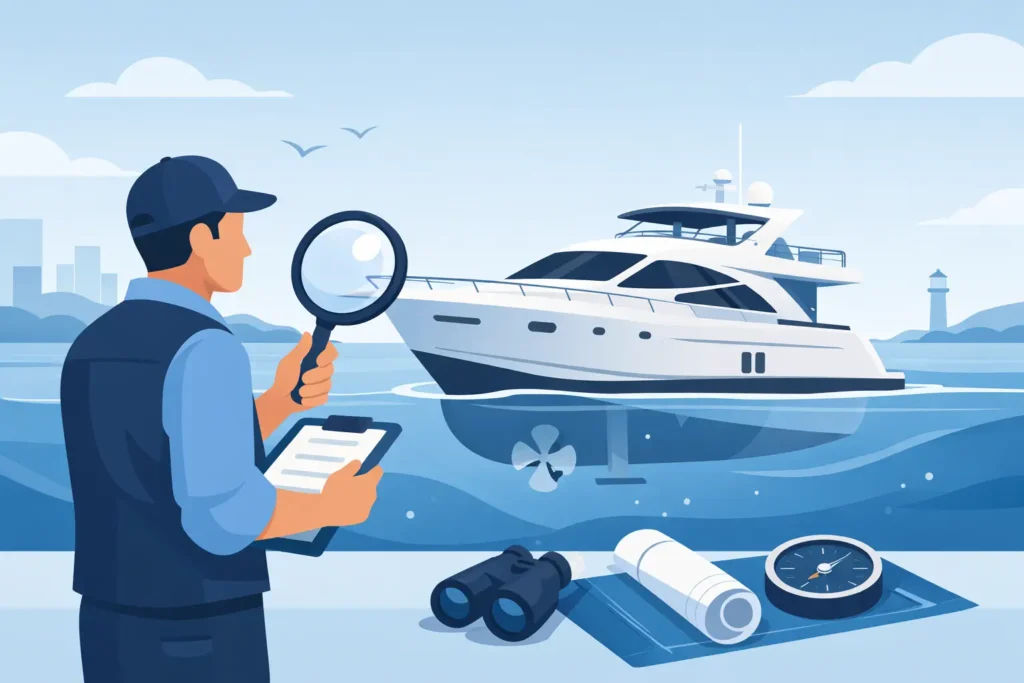
A polished hull, fresh engine-room paint, and a confident sales pitch can hide a surprising amount. That is why knowing how to choose a marine surveyor matters long before contracts are signed or funds are transferred. The right surveyor does more than identify defects – they help you understand risk, likely cost exposure, and whether a vessel is truly suitable for your plans.
For yacht buyers and owners in Turkey and the Mediterranean, this decision carries real financial weight. A marine survey is not a box to tick for insurance or paperwork. It is technical due diligence. If the surveyor lacks the right experience, misses critical issues, or communicates findings poorly, the consequence is rarely academic. It usually appears later as negotiation trouble, unexpected repair bills, safety concerns, or a purchase you regret.
What a good marine surveyor actually does
A competent marine surveyor is not there to validate a deal. They are there to assess condition objectively. That includes examining structure, systems, machinery, visible installation quality, maintenance standards, and signs of damage, deterioration, poor repairs, or deferred upkeep.
In a pre-purchase context, the surveyor’s role is especially important because the report becomes part of your decision-making process. It should help you distinguish between routine age-related findings and serious concerns that affect value, seaworthiness, or future ownership costs. A useful survey does not simply list faults. It gives those faults context.
That distinction matters. Almost every vessel has deficiencies. The question is whether those deficiencies are normal, manageable, expensive, safety-critical, or symptomatic of deeper neglect.
How to choose a marine surveyor for your type of vessel
The first filter is simple: choose a surveyor with direct experience in the type of boat you are buying or owning. A surveyor who mainly inspects small production sailboats may not be the right fit for a large motoryacht, a multihull, a classic wooden vessel, or a refit-heavy custom yacht.
Different construction methods and vessel categories create different failure points. FRP boats raise one set of concerns. Wooden vessels raise another. Complex motoryachts with stabilizers, generators, hydraulic systems, and integrated electronics demand a different level of technical familiarity than a simpler sailing yacht.
Ask what kinds of vessels the surveyor regularly handles, not just what they are willing to inspect. There is a practical difference between occasional exposure and repeated professional experience. If you are buying in a high-value segment, specialist knowledge is often worth far more than a lower survey fee.
Independence matters more than convenience
One of the clearest signs of a good surveyor is independence. You want someone whose judgment is not influenced by the broker, seller, yard, or any party with a financial interest in the transaction closing.
This is where buyers sometimes make an avoidable mistake. They accept the easiest recommendation in the chain without asking whether the surveyor has a working relationship that could compromise objectivity. Familiarity does not automatically mean bias, but independence should be visible, stated, and supported by professional conduct.
A surveyor should be comfortable delivering unwelcome findings. They should also be comfortable saying when they do not know, when specialist testing is needed, or when access limitations affect the inspection. That kind of restraint is often a stronger sign of professionalism than overconfident certainty.
Credentials are useful, but they are not the whole answer
Accreditation and professional membership matter because they indicate standards, training, and accountability. They can help you separate serious practitioners from unqualified inspectors. Still, credentials alone do not guarantee a thorough or commercially useful survey.
When considering how to choose a marine surveyor, look at qualifications together with experience, reporting quality, and communication style. A highly accredited surveyor who writes vague reports or struggles to explain consequences may be less helpful than a technically rigorous surveyor who combines formal credentials with clear client guidance.
In practice, clients need both competence and judgment. The surveyor should understand technical standards, but also how those findings affect negotiation, insurance, refit planning, and ownership risk.
Ask to see a sample report
If you ask one question before appointing a surveyor, make it this one. A sample report reveals far more than a resume. It shows how the surveyor thinks, how they structure findings, and whether they communicate in a way that helps clients make decisions.
A good report is detailed but not chaotic. It should separate major concerns from minor observations. It should use plain language where possible, identify areas that require urgent attention, and explain why a finding matters. Photographs should support the narrative, not replace it.
Be cautious of reports that are either too thin or too dramatic. A thin report may miss depth. An alarmist report may create noise without useful prioritization. The best survey reports are factual, balanced, and actionable.
Communication is part of the service
Marine surveying is technical work, but clients do not hire technical skill alone. They also hire interpretation. If a surveyor cannot explain findings clearly before, during, and after the inspection, the value of the service drops.
This is especially important for first-time buyers, international clients, and anyone purchasing in a market where multiple parties are involved across languages and jurisdictions. Strong communication helps prevent confusion, manages expectations, and gives you confidence in the process.
Pay attention to how the surveyor responds in early conversations. Are they precise? Do they ask sensible questions about the vessel, usage plans, and transaction stage? Do they explain scope, limitations, and likely next steps? Good communication at the start usually reflects good communication when pressure rises later.
Local knowledge helps, but should not replace objectivity
In the Eastern Mediterranean and Turkish market, local knowledge can be genuinely valuable. A surveyor familiar with regional yards, common maintenance practices, climate-related wear patterns, and local operating history may spot issues that a visiting generalist could miss.
That said, local presence only helps if it comes with professional distance. The surveyor should understand the market without becoming too close to it. You want informed judgment, not soft treatment because everyone knows everyone.
This balance is one reason clients often prefer firms that combine technical rigor with advisory experience. The Blue Matter, for example, positions its work around independent assessment and practical decision support, which is exactly what many buyers need when navigating high-value yacht transactions in Bodrum and beyond.
Be clear about scope before the inspection starts
Not every survey covers the same ground. Some clients assume a survey includes every system test, every specialist measurement, and every hidden area. In reality, scope depends on access, time, vessel condition, haul-out arrangements, and whether separate specialists are needed for engines, rigging, or ultrasonic testing.
Before appointing anyone, ask what is included and what is not. Will the survey cover sea trial attendance? Will it include moisture readings where appropriate? How are inaccessible areas treated in the report? Is machinery inspection visual, operational, or both? Are valuation comments included if required?
Clarity here prevents disappointment later. It also allows you to compare proposals properly. A cheaper fee may reflect a narrower scope, not better value.
Price matters, but false economy is common
It is reasonable to compare costs. Survey fees are part of transaction budgeting, and buyers should expect transparency. But choosing purely on price is one of the most expensive mistakes in the process.
A low-cost survey that misses structural moisture, poor previous repairs, corrosion, machinery neglect, or safety-critical installation faults can cost far more than the fee difference between providers. On high-value yachts, that gap becomes almost irrelevant compared with the financial exposure of a bad purchase.
The better question is whether the surveyor offers value through depth, independence, and judgment. Cheap surveys can be expensive. Thorough surveys can save a deal by clarifying manageable issues, or save a client from the wrong deal entirely.
Practical questions to ask before you appoint
A short call usually tells you a great deal. Ask what vessels they survey most often, whether they can share a sample report, what their inspection scope includes, and how they handle significant findings. Ask who the client is if a broker makes the introduction. Ask how quickly reports are delivered and whether post-survey discussion is included.
Also ask how they deal with uncertainty. A serious surveyor will not pretend every question can be answered on the spot. They will explain where specialist input, destructive inspection, or further testing may be required. That honesty protects you.
The right choice is rarely the loudest or the most reassuring voice in the room. It is the surveyor who stays factual, communicates clearly, and is prepared to tell you what the vessel is, not what others hope it will be.
Choosing carefully at this stage gives you more than a report. It gives you a steadier footing for every decision that follows.
Protect your investment and verify professional credentials by learning how to choose an independent, accredited marine surveyor.
About the Author
Mustafa Aksut is an experienced independent marine surveyor, yacht refit project manager, and founder of Blue Matter Marine Consulting in Turkey. Holding an Associate IIMS designation and professional membership with the American Boat and Yacht Council (ABYC), he specializes in pre-purchase yacht condition surveys, thermal imaging diagnostics, technical due diligence, and new build project oversight. Operating with 100% independent loyalty to the client, Mustafa never practices brokerage, performs repair work, or acts for boatyards and refit centers—ensuring strictly unbiased surveys and uncompromised owner representation.