What are the limitations of a marine survey
Answered by Mustafa Aksut, Accredited Marine Surveyor, IIMS, ABYC, and Navtech USSA Member
A marine survey provides an essential, unbiased assessment of a vessel’s structural integrity, safety equipment, and operational systems. However, buyers and boat owners must understand that every marine survey operates under strict, standardized industry boundaries. A survey is a visual, non-destructive inspection of accessible areas at a specific point in time.
Understanding these scope limitations prevents unrealistic expectations, helps you manage risk, and clarifies when secondary specialist inspections (such as engine oil analysis or rig pulling) are recommended.
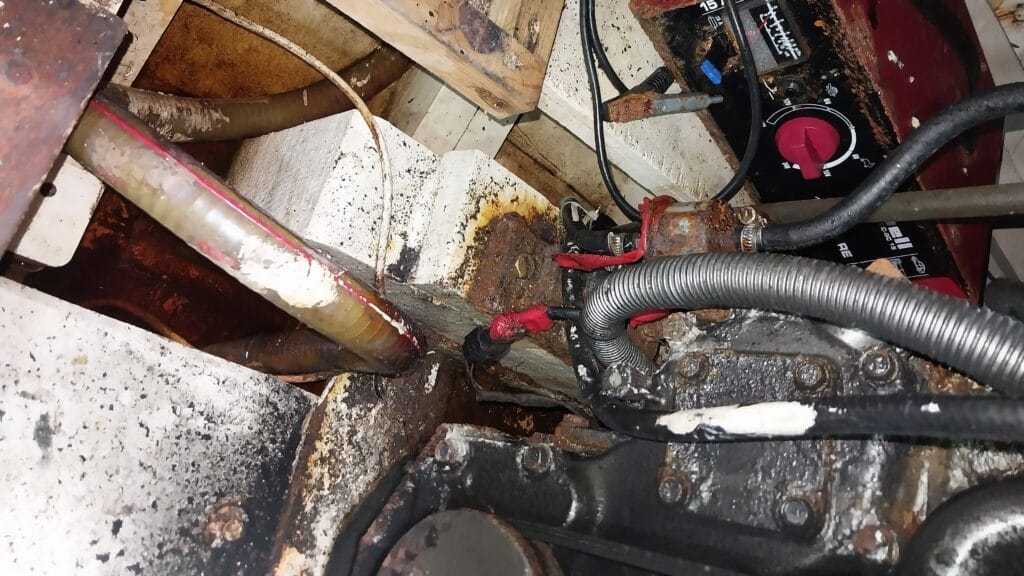
1. Non-Destructive Inspection (NDT) Boundaries
Marine surveyors utilize non-destructive testing tools—such as moisture meters, ultrasonic thickness gauges, thermal cameras, and sounding hammers—to detect latent defects without altering or damaging the vessel.
Preservation of finishes means surveys rely heavily on non-destructive testing rather than tearing open core laminates. To understand how localized surface indicators translate into deeper structural discoveries during pre-purchase evaluations, review our technical teardowns on signs of deck delamination and keel corrosion case studies.”
- No Disassembly: Surveyors do not remove joined cabinetry, headliners, teak decking, screwed floorboards, or sealed inspection hatches to inspect hidden structures.
- No Unfastening: Fasteners, keel bolts, engine components, and electrical panels remain assembled unless prior arrangements and owner permissions are established with a shipyard technician.
- Preservation of Finishes: Sounding and diagnostic checks are executed without scraping gelcoat, disturbing paint, or removing anti-fouling coatings.
2. Accessibility Constraints
A surveyor can only evaluate what is physically accessible and visible during the appointment. Common access constraints include:
- Personal Gear & Cargo: Overcrowded lockers, sails stored in berths, or heavy personal equipment blocking access to chain lockers, bilges, or hull frames.
- Sealed Tanks & Void Spaces: Internal surfaces of fuel, water, and waste tanks cannot be visually inspected internally unless fitted with accessible inspection ports.
- Containment & Insulation: Soundproofing material in engine compartments, thermal insulation behind hulls, or molded headliners obscure direct view of bulkheads and hull skins.
3. Mechanical, Electrical & Rigging Specialization Limits
While a marine survey covers the operational condition of engines, generators, electrical panels, and rig tension visually and under basic operating parameters, it is not a complete mechanical teardown or laboratory breakdown.
A. Engines & Mechanical Systems
Surveyors perform visual checks, monitor operating temperatures, inspect cooling lines, and observe performance during a sea trial. However, internal engine wear, cylinder compression, or internal gear wear require a dedicated certified marine engine mechanic and oil spectrographic analysis.
B. Standing Rigging & Spars
Sailboat standing rigging is inspected from deck level using high-magnification optics or close visual check up to reachable heights. Detecting micro-fractures inside chainplates, swage fittings, or at the masthead requires pulling the mast or unstepping the rig for non-destructive dye-penetrant / X-ray testing by a dedicated rigger.
4. Weather & Environmental Factors
Environmental conditions during the survey can impact inspection depth. High humidity or recent heavy rain can artificially influence surface moisture meter readings on decks. Similarly, adverse sea states during a sea trial may prevent reaching full Wide Open Throttle (WOT) speeds safely.
Frequently Asked Questions About Survey Limitations
Q: Is a marine survey non-destructive?
A: Yes, standard marine surveys are strictly non-destructive. Surveyors inspect accessible areas without drilling, unscrewing, or dismantling vessel components.
Q: Does a marine survey include internal engine diagnostics?
A: Standard surveys include visual checks and operational testing during sea trials. Internal teardowns, compression tests, or fluid analysis require a specialist engine mechanic.
Q: What areas are considered inaccessible during a survey?
A: Enclosed bilges under tanks, areas behind permanently installed headliners/cabinetry, and spaces blocked by owner equipment are noted as inaccessible in the survey report.
Related Marine Survey Resources
Explore additional guides from our FAQ hub to prepare for your inspection:
- FAQ Hub: Return to the central Marine Survey FAQ Hub.
- Scope & Inspection: See what is systematically checked in our guide on what is done in a marine survey.
- Duration & Timelines: Learn how time affects inspection depth in how long a marine survey takes.
- Surveyor Selection: Review credentials and report evaluation in how to choose a marine surveyor.

Mustafa Aksut is an Accredited Marine Surveyor with proven observation skills and solid technical knowledge. Mustafa gained extensive work experience while working as a marine Surveyor in Turkey and as a Marine service expert in Canada and the Bahamas.
He has completed a wide variety of projects, including but not limited to complete refits, electronics, electrical, engines and mechanical, plumbing, refrigeration, rigging, and safety systems on both sailing and motor yachts up to 150 feet in size.
Mustafa Aksut, with years of experience, is a leading marine surveyor who helps clients feel assured about their boats. He has personally inspected a wide range of vessels, from modern catamarans to traditional wooden yachts. His surveys include boats as small as 26 feet and as large as 150 feet, always with meticulous detail.
He has also managed many large refit projects for both wooden and fibreglass boats. This hands-on work allows him to spot problems early and provide smart advice that others might miss.
Mustafa Aksut, as an early adopter of the technology, uses proven tech for his inspections. To be able to reveal the entire story of the vessel, Mustafa uses thermal imaging, oil analysis, ultrasonic testers and more. Technology backs up the marine surveyor with more accurate non-destructive testing possibilities
Whether you’re buying a boat, checking on your current one, or planning a major project, Mustafa Aksut is the expert you can trust. His direct and clear reporting style and straightforward approach give you the confidence to feel safe while cruising.
Mustafa Aksut is a member of ABYC (American Boat and Yacht Council) ABYC standards are the foundation of his practice. Learn more about ABYC standards.
Mustafa Aksut also holds an Assoc IIMS from IIMS (International Institute of Marine Surveying) and Master Marine Surveyor credential through Navtech-USSA (US Surveyors Association).