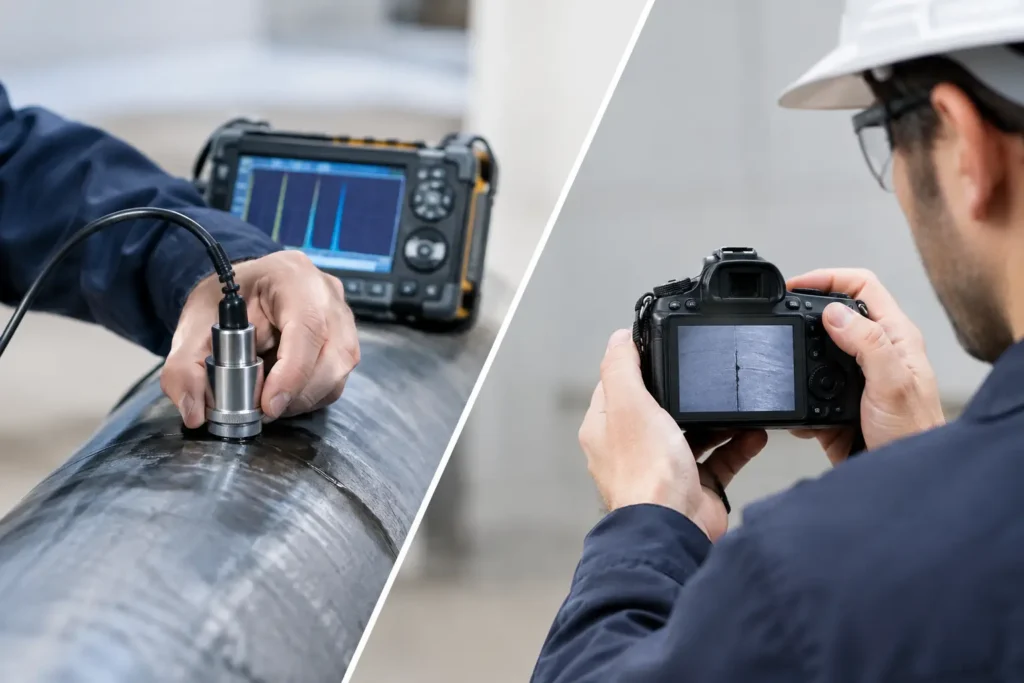
A yacht can look exceptionally well cared for at first sight and still carry deterioration where the eye cannot reach. This is why ultrasonic versus visual inspection is not a choice between an old method and a modern one. They are different tools used to answer different questions. A credible pre-purchase survey begins with careful visual examination, then uses ultrasonic testing where the vessel’s construction, age, history, and accessible evidence justify it.
For a buyer, the practical issue is simple: what does each method reveal, what can it miss, and how should the findings affect the purchase decision? The answer depends heavily on whether the yacht is steel, aluminium, FRP, wood, or a composite construction, as well as whether she is afloat, ashore, and properly prepared for inspection.
Visual Inspection: The Foundation of Every Survey
Visual inspection is often underestimated because it appears straightforward. In reality, it is the disciplined examination of accessible structure, machinery, systems, joinery, deck hardware, coatings, fittings, and evidence of maintenance or repair. It establishes the condition picture against which every further test is selected and interpreted.
A competent surveyor does not merely look for obvious damage. The work involves reading patterns. Rust bleeding around a fitting, blistering beneath a coating system, cracking at a chainplate, staining below a deck penetration, distorted frames, loose fastenings, uneven fairing, or fresh paint in a localised area may each point to a larger question. The finding is not automatically a defect of a particular severity, but it identifies an area that deserves closer investigation.
Visual inspection is particularly valuable on all yacht types because it assesses workmanship, access, general maintenance standards, and the relationship between components. A thickness reading may identify metal loss in a steel plate, for example, but it cannot by itself explain whether water is entering from a deck fitting, whether a repair was properly executed, or whether corrosion has affected adjacent internal structure.
It also has practical limitations. A surveyor can only inspect what is visible and accessible without destructive opening-up. Linings, insulation, tanks, furniture, machinery, stored equipment, antifouling, and heavy coatings can conceal important areas. An inspection conducted afloat will have different limits from one carried out ashore, where the underwater body, keel, rudder, propeller gear, and through-hull fittings can be examined properly.
Ultrasonic Versus Visual Inspection on Metal Yachts
Ultrasonic thickness measurement is most commonly associated with steel and aluminium yachts. The equipment sends a sound pulse through a material and measures the return time, allowing the operator to calculate the remaining thickness of the tested plate or component. When used correctly, it can reveal thinning that is not evident from the surface.
On a steel yacht, ultrasonic testing can help identify general wastage, isolated pitting, thinning around welds, corrosion near water traps, and loss of section in hull plating, tank boundaries, frames, bulkheads, or pipework. This information is especially useful where the yacht’s build thickness is known or can be established from plans, builder information, or representative sound areas.
Aluminium requires equally careful interpretation. Corrosion in aluminium vessels may be localised and can occur in areas affected by moisture retention, unsuitable insulation, electrical faults, dissimilar-metal contact, or poor previous repairs. A single satisfactory reading should never be treated as proof that an entire area is sound. Thickness measurement needs a considered grid, targeted readings around suspected locations, and correlation with internal inspection wherever access permits.
The phrase ultrasonic versus visual inspection can be misleading here because ultrasonic testing does not replace visual assessment. A reading shows the thickness at a specific point. It does not show every form of structural distress, coating failure, cracking, poor welding practice, trapped moisture, or the cause of corrosion. Conversely, visible rust or paint breakdown does not establish how much material remains beneath the surface. Reliable conclusions come from combining the two.
What Makes Ultrasonic Readings Reliable?
The quality of ultrasonic results depends on the operator, equipment, calibration, access, and test surface. Coatings, heavy fairing compounds, uneven corrosion, internal scale, and rough surfaces can all affect readings. The equipment should be calibrated against a suitable reference standard, and doubtful results should be repeated, compared with adjacent points, and interpreted in context.
A useful thickness report records more than a collection of numbers. It should identify the test locations, describe the components tested, state the nominal or reference thickness where available, and distinguish between general thinning and local anomalies. If a significant reduction is found, the report should explain the likely consequence and recommend an appropriate next step, such as further opening-up, repair pricing, specialist assessment, or a condition of purchase.
There is also a commercial point. Ultrasonic testing is most valuable when it is properly scoped. Random readings across easily reached hull areas may create false reassurance. A focused programme, based on the vessel’s construction, known weak points, visible evidence, bilge condition, tank arrangement, and repair history, provides more useful evidence for a buyer and their negotiating position.
FRP, Composite, and Wooden Vessels Need Different Methods
On FRP yachts, ultrasonic equipment can be used in specialist circumstances, but it is not a universal answer to laminate condition. FRP hulls may suffer from osmosis, impact damage, laminate defects, water ingress, core degradation, and delamination. These conditions often require a combination of visual assessment, percussion sounding, moisture measurement, thermal methods where justified, and, in selected cases, specialist non-destructive testing.
A moisture meter reading is not a diagnosis of osmosis, and a dull percussion response is not by itself proof of widespread delamination. Each result needs interpretation alongside the vessel’s age, laminate construction, recent haul-out history, coating system, and physical evidence. The concern is not to produce alarming data, but to determine whether there is a material risk requiring further investigation or allowance in the transaction.
Wooden and classic yachts demand another approach. Visual examination of planking, caulking, fastenings, frames, floors, deck structure, and areas around chainplates and through-hull fittings is central. Probing and moisture assessment may be appropriate, but access, timber species, coatings, and construction details all influence what can reasonably be concluded. Ultrasonic thickness measurement has limited relevance compared with its role on metal vessels.
When Should a Buyer Request Ultrasonic Testing?
Ultrasonic testing is not necessary for every yacht survey, but it should be actively considered where there is a meaningful possibility of hidden metal loss. It is often appropriate for:
- steel or aluminium hulls, particularly those with uncertain maintenance history or visible corrosion;
- metal tanks, pipework, and structural members where access or age raises concern;
- yachts with prior grounding, repair, water-ingress, or corrosion history;
- vessels where the purchase price or planned refit makes structural certainty commercially important.
The timing matters. Ideally, the scope is agreed before the survey and coordinated with haul-out, cleaning, and access arrangements. If the yacht is ashore, the hull should be sufficiently clean for inspection. Internal lockers, bilges, and machinery spaces should be made accessible. A buyer should also understand that a pre-purchase survey is non-destructive unless otherwise agreed, so concealed areas may remain outside the scope.
Turning Findings Into a Purchase Decision
The purpose of inspection is not to produce a perfect yacht. Few pre-owned vessels will meet that standard, particularly in the Mediterranean market where age, seasonal use, refits, charter activity, and long periods afloat can all influence condition. The purpose is to establish facts, distinguish routine maintenance from material defect, and give the buyer a defensible basis for proceeding, renegotiating, requesting repairs, or walking away.
A well-presented report should be clear about confidence levels. It should separate observed defects from recommendations made because an area could not be accessed. It should also avoid treating every cosmetic flaw as a structural concern or every low reading as an immediate condemnation. Severity, extent, location, remaining margin, and repair feasibility all matter.
For sellers, a realistic understanding of this process can prevent unnecessary dispute. Preparing the yacht, disclosing known repairs, and making records available does not weaken a sale. It supports an orderly technical review and allows genuine issues to be evaluated fairly.
The most useful inspection is the one that asks the right question before testing begins. If a vessel’s history, material, and visible condition suggest a hidden risk, targeted ultrasonic work can provide evidence that the eye alone cannot. If the concern lies in fittings, workmanship, laminate condition, or water entry, visual inspection and other appropriate methods may tell the more meaningful story. A buyer should seek clear findings, sensible limits, and advice that supports a decision they can live with after the transaction is complete.